


Every child develops differently. Some begin talking early, while others take more time. Some love noisy group activities, while others prefer quieter play. Differences alone do not automatically mean that a child needs therapy.
However, parents sometimes notice a pattern that continues to affect communication, learning, movement, behaviour, self-care, or participation in everyday activities.
Understanding the signs your child needs therapy can help you decide when observation may be enough and when a professional developmental assessment could provide useful clarity.
The goal is not to label a child based on a checklist. It is to understand whether a particular difficulty is making everyday life harder and whether additional support could help.
Developmental Concerns Should Be Viewed as a Pattern
One isolated behaviour rarely tells the whole story.
A child may refuse a certain food because they simply dislike it. Another may be quiet around unfamiliar people but communicate comfortably at home. A child may occasionally have a difficult transition after a tiring day.
Parents should pay more attention when difficulties are:
- Persistent over time
- Appearing in several settings
- Affecting everyday participation
- Causing significant frustration
- Interfering with learning or communication
- Making age-appropriate daily activities consistently difficult
- Accompanied by loss of previously acquired skills
India’s Ministry of Health & Family Welfare recognises developmental screening through the Rashtriya Bal Swasthya Karyakram (RBSK), which includes areas such as language delay, motor delay, hearing impairment, autism-related behavioural concerns, learning disorders, and ADHD.
A professional assessment can help identify the signs your child needs therapy and determine whether they may benefit from ongoing support, monitoring, another evaluation, or simply more time to develop.
Signs Related to Speech and Language

Speech and language concerns are among the most common reasons parents seek developmental guidance.
Potential signs can include:
- Limited use of words or sentences compared with the child’s overall development
- Persistent difficulty understanding everyday instructions
- Speech that familiar people find difficult to understand
- Frequent communication-related frustration
- Difficulty answering or asking questions
- Trouble explaining experiences
- Limited use of gestures or other communication
- Ongoing stuttering or fluency concerns
- Loss of words or communication abilities previously used
Speech and language are not the same thing.
A child may understand language well but have difficulty producing sounds clearly. Another may pronounce words clearly but struggle to understand instructions or form meaningful sentences.
Families who notice these concerns can learn more about Speech Therapy in Jalandhar and how individual assessment can guide communication goals.
Communication Concerns in Multilingual Punjab Families
Many children in Punjab hear Punjabi, Hindi, and English across home, school, relatives, and community environments.
Using several languages does not automatically mean that a child has a speech delay.
Parents should consider the child’s communication across all languages rather than judging development only in English or only in Punjabi.
A therapist should know which languages the child hears regularly, which they understand best, and how they communicate with different family members.
When speech or language difficulty is persistent across the child’s overall communication environment, professional assessment may be more useful than simply removing one language.
Signs Related to Sensory and Everyday Activities
Occupational therapy is often misunderstood as therapy only for handwriting or pencil grip.
In reality, a child may need occupational therapy support when sensory, motor, coordination, or self-care difficulties interfere with everyday participation.
Possible signs can include:
- Strong distress around certain clothing textures
- Difficulty managing noisy or crowded environments
- Frequent difficulty with dressing or other self-care routines
- Challenges using utensils
- Persistent problems with coordination or motor planning
- Difficulty participating in classroom tasks
- Trouble organising materials
- Strong avoidance of everyday grooming activities
- Difficulty transitioning between activities
- Sensory responses that significantly interfere with daily routines
A child does not need occupational therapy simply because they are sensitive, active, or occasionally clumsy.
The important issue is whether the difficulty consistently limits participation.
Families seeking support with these areas can explore Occupational Therapy in Ludhiana for individualised sensory, motor, self-care, and participation goals.
Social Communication and Autism-Related Signs

Parents may become concerned when a child communicates or interacts very differently from peers.
Autism is not identified from one behaviour alone, and parents should avoid diagnosing a child from online checklists.
Patterns worth discussing with a qualified professional can include:
- Limited response to social interaction
- Difficulty sharing interests with other people
- Limited functional communication
- Strong preference for predictable routines
- Significant distress with changes
- Repetitive patterns that interfere with participation
- Unusual sensory responses
- Difficulty joining or maintaining social play
- Communication differences across several settings
- Loss of previously developed social or communication abilities
Some autistic children speak extensively. Others use fewer spoken words or communicate through gestures, pictures, or alternative communication methods.
Autism-related support should therefore focus on the individual child rather than trying to make every child behave the same way.
For parents considering professional Autism Treatment in Ludhiana, an assessment can help identify communication, sensory, behavioural, learning, and everyday-living priorities before therapy goals are selected.
Behaviour Can Be a Signal, Not Just a “Bad Habit”
Meltdowns, refusal, aggression, or intense distress can be difficult for families.
However, behaviour does not always tell you why a child is struggling.
A child may become upset because:
- They cannot communicate what they need
- A sensory environment feels overwhelming
- They do not understand an instruction
- A routine changed unexpectedly
- A task is too difficult
- They are tired or uncomfortable
- They lack another strategy for handling frustration
This is why developmental support should look at what happens before, during, and after a difficult behaviour.
The objective should not simply be stopping behaviour. It should include understanding what the child is communicating and helping them develop safer, more effective skills.
Signs That School Participation Is Becoming Difficult
Developmental challenges often become more visible once a child enters preschool or school.
Teachers and parents may notice:
- Difficulty following classroom instructions
- Trouble remaining engaged in age-appropriate activities
- Persistent handwriting or fine-motor difficulty
- Challenges understanding classroom language
- Difficulty transitioning between activities
- Limited participation with classmates
- Struggles learning basic academic concepts despite support
- Problems organising school materials
- Communication frustration in the classroom
Some children need therapy for motor, sensory, or communication needs.
Others primarily require educational support.
When learning difficulties are the main concern, Special Education Therapy in Jalandhar can support individualised learning, school readiness, attention, reading, writing, and related educational goals.
The right service depends on assessment rather than choosing therapy only from the visible symptom.
Speech Therapy Support in Ludhiana
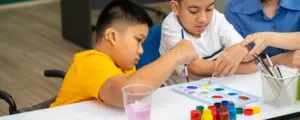
Parents may seek local help when speech or language difficulties continue to affect communication at home or school.
A child may be using words but remain difficult to understand. Another may have difficulty forming sentences, answering questions, or following instructions.
For families in Ludhiana, Speech Therapy in Ludhiana can focus on personalised goals related to speech clarity, language, fluency, and functional communication.
Parents should expect therapy goals to be explained clearly rather than being told only that the child is “working on speech.”
Loss of Previously Learned Skills Deserves Prompt Attention
One of the most important developmental changes for parents to notice is regression.
This means a child loses a skill they previously used consistently.
Examples may include losing spoken words, becoming less responsive socially, losing a previously established motor ability, or suddenly becoming unable to manage an activity they had already mastered.
Regression can have different causes and should not automatically be attributed to one condition.
However, a noticeable loss of skills is a reason to seek professional medical or developmental advice rather than relying only on observation at home.
Therapy Does Not Always Start With a Diagnosis
Parents sometimes avoid an assessment because they are worried about receiving a diagnosis.
However, children can receive support for specific functional difficulties without every concern being linked to autism or another broader diagnosis.
For example, a child may receive speech therapy for communication difficulties or occupational therapy for motor and sensory participation needs.
Assessment is primarily about understanding the child.
It can identify strengths, clarify concerns, and help families decide whether professional support is appropriate.
Choosing the Right Type of Support
Different therapies address different areas.
Speech therapy can support speech, language, fluency, social communication, and functional communication.
Occupational therapy may support motor skills, sensory-related participation, self-care, school activities, play, and everyday independence.
Autism-related developmental support can address individual communication, social, behavioural, sensory, and daily-living needs.
Special education focuses more directly on learning, school readiness, academic skills, and individual educational needs.
Some children may benefit from more than one professional.
Others may need only one targeted service.
More therapy is not automatically better. Appropriate therapy is better.
Parent Observations Are Valuable During Assessment
Parents see their children across many situations that a therapist cannot observe during one clinic appointment.
Before an assessment, it can help to note:
- Activities your child finds difficult
- Situations that trigger frustration
- Communication methods they currently use
- Areas where they are independent
- Teacher observations
- Skills that have improved
- Skills that appear to have stopped progressing
- Any loss of previously acquired abilities
Short videos of everyday activities may also be useful when a professional specifically asks for them.
The purpose is not to collect evidence against the child.
It is to give the assessment team a clearer picture of real everyday functioning.
Progress Should Be Measured Against Individual Goals
Children do not progress at identical speeds.
For one child, progress may mean using a new word.
Another may learn to get dressed with less help.
Another may participate in a classroom routine more comfortably.
Useful therapy goals should be specific enough that parents can understand what is changing.
Rather than being told simply that a child is “doing better,” families should understand what skills are being targeted and how progress is reviewed.
Support Across Punjab
Bright Horizon Child Development Center provides multidisciplinary developmental support for children across Punjab, including centres in Jalandhar, Ludhiana, Amritsar, Hoshiarpur, and Pathankot.
The centre provides services including speech therapy, occupational therapy, autism therapy, behavioural support, sensory integration, and special education.
The right starting point is not enrolling a child in every available therapy.
It is understanding which areas, if any, require professional support.
Final Thoughts
Recognising the signs your child needs therapy does not mean diagnosing your child at home.
It means noticing when communication, sensory needs, movement, behaviour, learning, or everyday skills are consistently making life harder.
Some children may need therapy.
Some may benefit from assessment and parent guidance.
Others may simply need monitoring.
The most useful next step is clarity.
When parents understand what their child is finding difficult, they can make better decisions about the kind of support that may help.
Concerned About Your Child’s Development?
If you have noticed ongoing difficulties with your child’s speech, learning, behaviour, sensory needs, movement, or everyday independence, you do not have to decide the next step alone.
Bright Horizon Child Development Center can help you understand your child’s developmental needs and which type of assessment or support may be appropriate.
Have questions or want to discuss what you have been noticing? Contact Bright Horizon Child Development Center to speak with the team and get clearer guidance on the next step.
Frequently Asked Questions
1. Does Every Developmental Difference Mean My Child Needs Therapy?
No. Children develop differently. Therapy should be based on persistent functional concerns and professional assessment rather than one isolated behaviour.
2. What Are Common Signs a Child May Need Speech Therapy?
Persistent difficulty understanding or using language, unclear speech, fluency concerns, communication-related frustration, or loss of previously used communication skills can justify professional assessment.
3. What Are Common Signs a Child May Need Occupational Therapy?
OT assessment may be useful when sensory, motor, self-care, coordination, or school-participation difficulties consistently interfere with everyday activities.
4. Can a Child Receive Therapy Without an Autism Diagnosis?
Yes. Speech, occupational, educational, and other developmental services can address specific needs without requiring every child to have an autism diagnosis.
5. Can Speech and Occupational Therapy Be Used Together?
Yes, when both are appropriate. They address different areas but can sometimes support overlapping goals involving communication, play, self-care, and participation.
6. Should Parents Wait to See If a Concern Goes Away?
Occasional differences may resolve with development, but persistent concerns affecting everyday life are worth discussing with a paediatrician or qualified developmental professional. An assessment does not automatically mean therapy will be required.
7. How Long Will My Child Need Therapy?
There is no standard timeline. Duration depends on the child’s needs, goals, progress, and professional recommendations.