

When your child struggles to say their first words, pronounce simple sounds, or communicate their needs, every day can feel like a new challenge.
You may notice frustration in your child because they know what they want to say, but cannot express it clearly.
If your child is struggling to connect thoughts into spoken words, it isn’t a lack of intelligence. And it certainly isn’t something they will just “magically grow out of” because a well-meaning relative told you to wait.
For parents navigating this, finding the right support locally can feel overwhelming. If you are tracking developmental milestones or looking for the best speech therapy center Punjab has to offer, bridging that gap early is the most impactful step you can take.
Why Old-School Speech Drills Don’t Work on Modern Kids
If you think modern speech therapy is just a clinician sitting across a wooden desk forcing a toddler to repeat the word “apple” fifty times, think again. That outdated approach is exactly why so many children tune out within the first ten minutes.
Today’s generation of digital-native kids processes information completely differently. Their brains are wired for rapid visual transitions, interactive feedback loops, and highly engaging social environments. When a child experiences speech delays, their frustration builds because their internal thoughts are moving fast, but their verbal production can’t keep up.
Why Modern Speech Therapy for Kids Matters More Than Ever
Today’s generation of children grows up in an interconnected, highly stimulating digital ecosystem. While technology is great, excessive passive screen time can sometimes delay active expressive speech. Parents often notice their children using gestures or showing frustration when they can’t express what they want.
Early intervention is highly effective because a child’s brain is incredibly adaptable between the ages of 2 and 15. Addressing challenges like misarticulation (unclear pronunciation), stammering, or structural communication blocks early prevents social anxiety later in life.
Professional speech therapy for kids Punjab focuses on functional communication—helping kids express feelings, ask questions, and engage confidently with their peers at school and home.
Is your child struggling to express thoughts or skipping milestones? Don’t wait out a delay. Connect with a Child Development Expert Today, Call +91-9800990088 for a direct consultation.
When Should Parents Consider Speech Therapy?
Many families wonder whether they should wait or seek professional advice. Every child develops differently. However, certain signs deserve attention.
A child may benefit from speech therapy if they:
- Speak very few words compared to children of the same age.
- Have difficulty understanding simple instructions.
- Struggle to pronounce words clearly.
- Become frustrated because they cannot communicate.
- Stammer or repeat sounds frequently.
- Have delayed speech associated with autism or developmental conditions.
- Show difficulty interacting with other children.
Getting an assessment early does not mean your child definitely needs long-term therapy. It simply gives you clarity about the next steps.
Speech Therapy Works Best When Parents Become Part of the Journey
One of the biggest misconceptions is that speech development happens only during therapy sessions. Children spend far more time at home than they do in the clinic.
The most successful therapy programs actively involve parents by sharing:
- Home practice activities
- Communication strategies
- Daily language-building ideas
- Progress updates
Even 15–20 minutes of meaningful interaction every day can reinforce skills learned during therapy.
What Happens During a Speech Therapy Session?
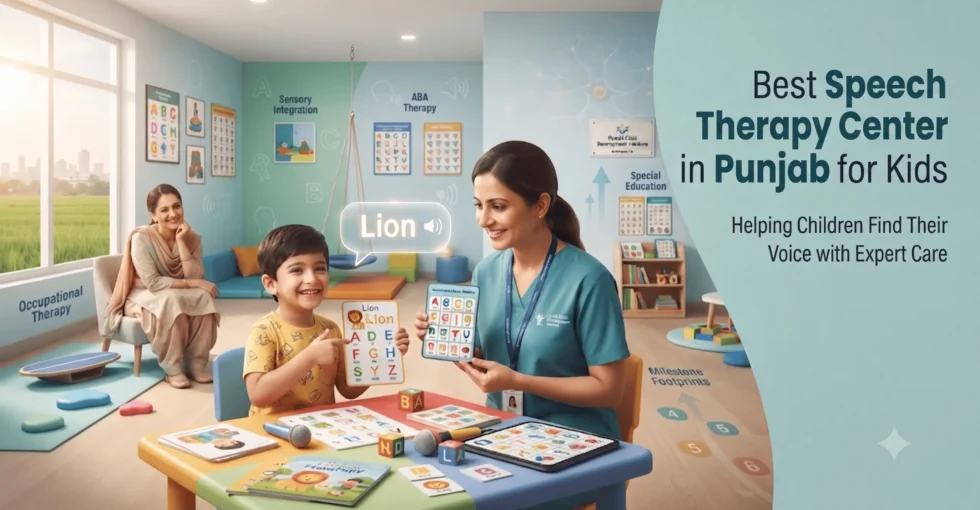
Parents are often surprised to see how interactive therapy sessions are. Instead of formal classroom teaching, sessions are usually designed around play, conversation, and real-life communication.
A therapist may use:
- Storytelling
- Interactive games
- Picture cards
- Role-play
- Language-building activities
- Problem-solving exercises
Every activity has a purpose. Children learn while enjoying the process.
Conditions That Can Benefit from Speech Therapy
Speech therapy supports much more than delayed speech.
Children may benefit if they have:
- Speech Delay – Children who are slower to develop spoken language than expected for their age.
- Speech Sound Disorders – Difficulty producing certain sounds correctly.
- Stammering (Fluency Disorders) – Interruptions in the natural flow of speech.
- Language Disorders – Challenges with understanding or expressing language.
- Autism Spectrum Disorder – Many autistic children benefit from speech therapy to improve communication and social interaction.
- Developmental Delays – Speech therapy often forms an important part of early intervention programs.
Introducing Bright Horizon Child Development Center
Bright Horizon Child Development Center (a proud unit of Apricus Health Care India Pvt Ltd) is designed specifically to address complex developmental and communication needs under one roof. Recognizing that speech issues rarely exist in a vacuum, the center provides an integrated ecosystem of clinical care across major hubs, delivering premier Speech Therapy in Jalandhar and Speech Therapy in Ludhiana.
The clinical team includes expert, certified therapists who design personalized treatment plans around your child’s specific routine, interests, and milestones. Rather than using rigid, repetitive drills, sessions are transparent, goal-based, and highly collaborative.
To support busy modern families, Bright Horizon utilizes digital therapy records. This ensures you can track every milestone, mastered sound, and behavioral shift on your smartphone.
If your child needs a combination of a child speech therapist Punjab team alongside sensory integration or special education, the entire care panel coordinates digitally to keep treatment unified.
Finding the Right Care: From Jalandhar to Ludhiana
Accessing a specialized speech clinic Punjab shouldn’t mean traveling hours out of your way. Top-tier pediatric therapy requires consistent attendance, which is why clinical centers are strategically positioned across Punjab’s major urban areas.
- Speech Therapy in Ludhiana: Equipped with state-of-the-art sensory gyms and specialized rooms for individual articulation focus, helping kids transition smoothly into standard school environments.
- Speech Therapy in Jalandhar: Centrally located facilities featuring dedicated child development spaces where a certified best speech therapist Punjab works one-on-one with your child using play-based clinical modules.
Progress starts with a single targeted conversation. Let’s discuss your child’s specific milestones.
Schedule a Detailed Evaluation Session, Call +91-9800990088 to speak directly with our admissions and clinical coordinator.
Why Early Intervention Makes Such a Difference
Children’s brains develop rapidly during the first few years of life. Early support gives therapists the opportunity to strengthen communication skills while these developmental pathways are still forming. That doesn’t mean older children cannot improve.
They absolutely can.
However, identifying communication challenges early often makes therapy more effective and helps children build stronger foundations for school, friendships, and everyday life.
Build Your Child’s Communication Roadmap
Finding the best speech therapy center Punjab isn’t about choosing the clinic with the biggest promises.
It’s about finding professionals who understand your child’s unique journey, communicate openly with your family, and create a personalized plan that supports meaningful progress.
Give your child the tools to speak clearly, share their ideas, and connect with the world confidently. Protect their critical developmental window by setting up a structured diagnostic consultation today.
Reach Out to Bright Horizon: Call our team directly at +91 9800990088 to secure your personalized care plan.
Parent Concerns & FAQs
- How do I know if my toddler’s speech delay is just a temporary phase or a true clinical issue?
If your child is 18 months old and doesn’t respond to their name or simple gestures, or if they are 2 years old and cannot produce at least 50 spontaneous words or combine two unique words together, it is time to consult a professional. Relying on the old myth that “some kids just talk late” can cause families to miss the peak window of early neuroplasticity.
- Will speaking multiple languages at home (like Punjabi, Hindi, and English) worsen my child’s speech delay?
Speaking multiple languages does not necessarily cause a speech delay. However, for children with speech delays or autism, we often recommend that family members use one primary language consistently while interacting with the child, especially during the early stages of therapy. A consistent language environment can make it easier for the child to understand, learn, and communicate without confusion. As your child’s communication skills improve, additional languages can be introduced gradually under the guidance of your speech therapist.
- How long does a typical child need speech therapy before seeing results?
Every child’s neurological profile is unique. However, data shows that with regular sessions, initial functional communication changes—like improved eye contact, reduced frustration, or clearer word attempts—are frequently visible within 8 to 12 weeks. Complete milestone alignment depends on whether the child is managing a simple speech delay, stammering, or neurodivergent traits like autism.
- What happens during the first speech therapy appointment?
The therap usually conducts a detailed assessment, discusses developmental history, observes communication skills, and creates a personalized treatment plan.
- Can parents continue speech therapy activities at home?
Absolutely. Home practice plays an important role in reinforcing the skills learned during therapy sessions.
- Can speech therapy improve my child’s confidence?
Yes. As communication skills improve, many children become more confident in expressing themselves, participating in school, and interacting with others.