
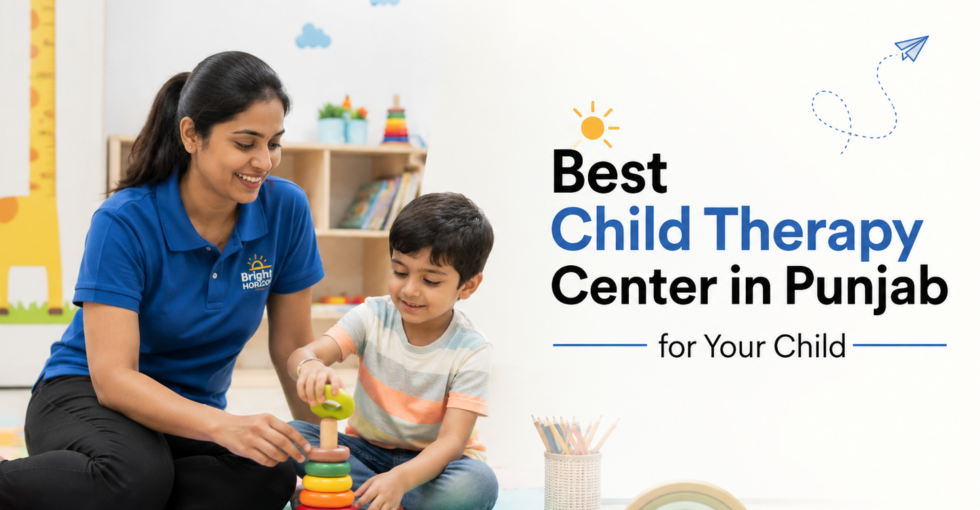

Every parent wants the same thing—to see their child healthy, happy, confident, and ready for the future.
But what happens when your child isn’t reaching developmental milestones at the expected pace?
Maybe your toddler isn’t speaking yet.
Maybe your child struggles to concentrate in school.
Perhaps they’re finding it difficult to make friends, manage emotions, or complete everyday activities independently.
These concerns can leave parents feeling confused, anxious, and unsure about where to seek help.
That’s why more families today are looking beyond traditional healthcare and searching for the best child therapy center in Punjab—a place that doesn’t just treat symptoms but supports a child’s overall growth and development.
The right child therapy center helps children build communication, learning, behaviour, sensory, and life skills that improve their confidence both today and in the future.
What Does a Modern Child Therapy Center Actually Do?
A dedicated child therapy center that Punjab parents rely on is very different from a standard clinic. Instead of just treating physical illnesses, a specialized child therapy clinic focuses on neurodevelopmental growth, emotional regulation, communication, and sensory processing.
Instead of running across town to see three different specialists, a speech expert on Monday, an occupational therapist on Wednesday, and a behavioral therapist on Friday, a unified pediatric center brings these disciplines together under one roof.
Quick Reality Check: Early intervention between ages 2 and 5 takes advantage of peak brain neuroplasticity. Addressing small developmental gaps early prevents them from turning into major learning barriers later.
When Should Parents Visit a Child Therapy Center?
Many parents wait because they hope their child will naturally “catch up.”
Sometimes that happens.
Sometimes additional support is needed.
Consider a professional developmental assessment if your child:
- Has delayed speech or unclear communication.
- Finds it difficult to interact with other children.
- Has trouble focusing during activities.
- Is sensitive to sounds, textures, or crowded places.
- Faces challenges with learning or classroom participation.
- Struggles with behaviour or emotional regulation.
- Needs extra support due to autism or developmental delays.
Seeking guidance early doesn’t mean something is seriously wrong. It means you’re giving your child the opportunity to receive support if needed.
Concerned About Your Child’s Development?
Every child develops differently. A professional assessment can help you understand your child’s strengths and identify areas where support may be beneficial.
Speak with our child development experts today: +91 9800 990 088
Core Types of Therapy Every Parent Should Know
When navigating pediatric therapy Punjab services, understanding the types of therapy available helps you make informed choices without feeling overwhelmed by clinical jargon:
- Applied Behavior Analysis (ABA) & Behavioral Modification: Focuses on building positive daily routines, improving social interaction, and reducing frustration-led meltdowns by replacing them with functional communication skills.
- Speech & Language Therapy: Helps children express their thoughts clearly, understand instructions, build vocabulary, and correct motor-speech articulation errors.
- Occupational Therapy & Sensory Integration: Helps kids who are either over-sensitive or under-sensitive to sound, touch, or light, while improving fine motor skills (like holding a pencil or buttoning a shirt).
- Special Education Therapy: Tailors learning strategies for neurodivergent children so they can manage academic tasks, stay focused, and transition smoothly into traditional school environments.
Why One Therapy Alone Is Not Always Enough
A child with delayed speech may also have sensory challenges. A child with autism may need support with communication, behaviour, and learning at the same time.
This is why multidisciplinary care is so valuable.
Instead of different therapists working separately, they collaborate toward shared developmental goals. This coordinated approach often leads to more meaningful progress.
What Makes a Child Therapy Center Different from a Regular Child Therapy Clinic?
Many parents searching for a child therapy clinic are unsure what separates a therapy center from a standard clinic.
The biggest difference is the approach. A regular clinic may focus on one therapy.
A child therapy center focuses on the child’s overall development.
Rather than asking, “Which therapy should we provide?”
A therapy center asks, “What does this child need to thrive?”
That difference changes everything.
Why Parent Participation Is One of the Biggest Success Factors
Therapy sessions usually last for a limited time each week.
Children spend most of their time with their families.
That’s why modern child therapy programs encourage parents to become active partners.
Simple everyday activities like reading together, talking during meals, playing interactive games, and encouraging independence help reinforce therapy goals.
Children learn best when therapy continues naturally at home.
What Makes Bright Horizon the Best Child Therapy Center or Child Development Center in Punjab?
Navigating multiple developmental challenges requires a cohesive clinical team rather than isolated opinions. Bright Horizon Child Development Center, a unit of Apricus Health Care India Pvt Ltd, operates as a premier multidisciplinary facility across the region.
Serving children aged 2 to 15 years, Bright Horizon combines clinical expertise with modern digital healthcare standards to give parents complete clarity:
- Expert Certified Therapists: Every intervention is delivered by RCI-registered and specialized certified therapists who understand modern pediatric care.
- Personalized Treatment Plans: No cookie-cutter templates. Therapy strategies are built around your child’s specific strengths, interests, and sensory profile.
- Digital Therapy Records: Parents don’t have to guess if progress is happening. Every session’s data, milestone tracking, and clinical charts are stored digitally for complete transparency.
- Integrated Statewide Care: Whether you are seeking specialized Autism Treatment in Ludhiana or looking for a certified Speech Therapist in Jalandhar, Bright Horizon brings gold-standard clinical programs within your reach.
Take the First Step Toward Clarity
You don’t have to wait and hope things sort themselves out. Give your child the structured support they deserve.
Book a Consultation Today: Call +91 9800 990 088 to speak with an expert child therapist Punjab families trust.
3 Things Today’s Generation of Parents Should Look For
If you are evaluating a best child clinic Punjab list, keep these three non-negotiable standards in mind:
- Transparent Data Over Vague Assurances: A good clinic won’t just say, “He’s doing better.” They will show you data—like “Sanya went from using 2-word phrases to 4-word complete sentences in 8 weeks.”
- Parent Co-Regulation Training: Therapy that stays inside the clinic room isn’t enough. The best centers actively train parents on how to handle sensory overload and speech prompts at home during everyday routines.
- Cross-Disciplinary Team Meetings: Your child’s speech therapist, occupational therapist, and special educator should actively talk to each other so all goals align seamlessly.
Why Modern Parents Are Choosing Child Therapy Centers
Today’s parents have access to more information than ever before.
They don’t just want treatment.
They want understanding.
They want clear communication from therapists.
They want measurable progress.
They want digital updates instead of uncertainty.
They want practical advice they can use at home.
Modern child therapy centers combine expert care with family involvement, making parents active participants in their child’s growth rather than passive observers.
Ready to Explore Personalized Developmental Care for Your Child?
If you have concerns about your child’s communication, learning, behaviour, or overall development, don’t wait for uncertainty to become a worry.
A developmental assessment can provide answers, guidance, and a personalized plan for your child’s future.
Connect with Bright Horizon Child Development Center today to schedule a consultation with our experienced child development specialists.
Call: +91 9800 990 088
Frequently Asked Questions
1. How do I know if my child needs therapy or if they are just a late talker?
While every child develops at their own pace, missing key developmental markers—like not responding to their name by 12–15 months, having no single words by 18 months, or avoiding eye contact—signals it is time for a professional screening. Early screening never hurts, but waiting too long can cost valuable intervention time.
2. Can my child receive multiple therapies (Speech + ABA + OT) in one place?
Yes. Integrated centers like Bright Horizon Child Development Center offer multidisciplinary care under one roof. This prevents therapy fatigue for the child and ensures all specialists work off the exact same behavioral plan.
3. How do digital therapy records help parents track progress?
Digital therapy records track objective session data, video benchmarks, and milestone logs. Instead of relying on subjective feedback, you can log into your child’s profile to see visual charts showing exact improvements over weeks and months.
4. Does every child need multiple therapies?
No. Therapy recommendations are based on each child’s developmental assessment. Some children benefit from one therapy, while others may need a combination.
5. What is the benefit of multidisciplinary therapy?
Different specialists work together to create coordinated treatment plans, helping children make progress across multiple developmental areas simultaneously.
6. How do therapists measure progress?
Progress is tracked through individualized goals, regular reviews, observations, parent feedback, and developmental milestones.
7. How early should developmental concerns be assessed?
Early assessment allows children to receive appropriate support during important stages of brain development. Early intervention often improves long-term outcomes.
8. Is Special Education Therapy only for school-going children?
No. It can also help younger children develop learning readiness, attention, communication, and foundational academic skills before formal schooling begins.